
Home Assessment Program
The Home Assessment Program is a free, recommendation-based initiative designed to help landowners align their properties with home hardening and defensible space guidelines. This program aims to enhance community safety and reduce the risk of home ignition due to wildfires. As part of the program, Inland Empire Resource Conservation District (IERCD) staff will conduct a free home hardening and defensible space assessment. Our team is trained through the University of California Agriculture and Natural Resources (UCANR) Fire Network and CAL FIRE’s Defensible Space Assessor (DSA) program, equipping us with the expertise to provide informed recommendations tailored to you.
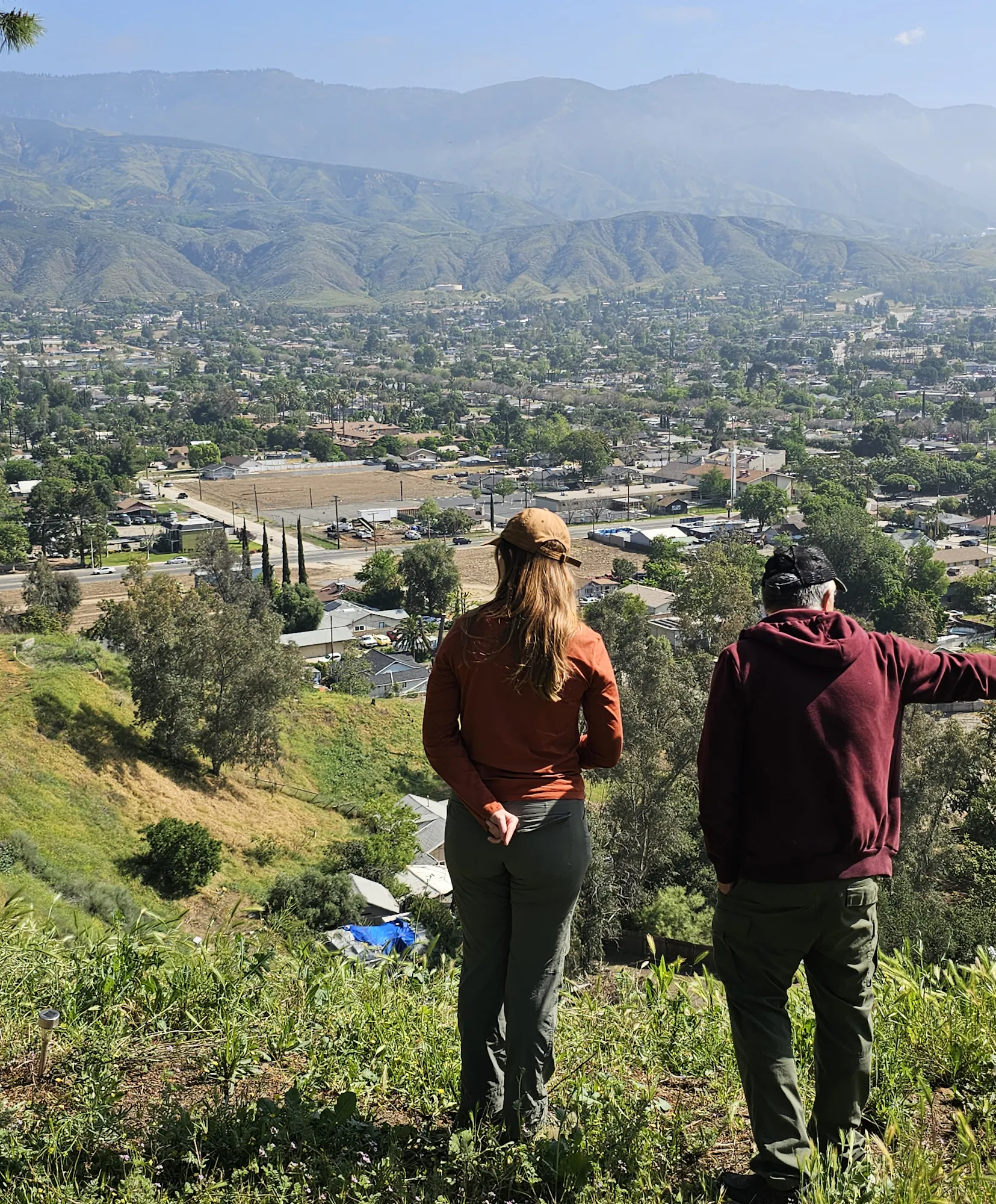
What’s included in this program?
- A free on-site home assessment with trained IERCD home assessors, where we will evaluate your home's ignition risk by reviewing defensible space and home hardening practices on your property.
- A comprehensive report with a list of recommended actions to help reduce your home's ignition risk.
- Tailored resources to help implement the recommended actions including technical documents and referrals to local agencies, organizations, or contractors that may be able to support.
- Free 1/16th inch metal mesh screens to install on your vents to reduce your home's ignition risk.
Eligibility: To be eligible for this program, you must own or rent home within IERCD's service area boundary. Not sure if your home is within our service area? Click here to check!
What is Defensible Space?
Defensible Space: Your First Line of Defense
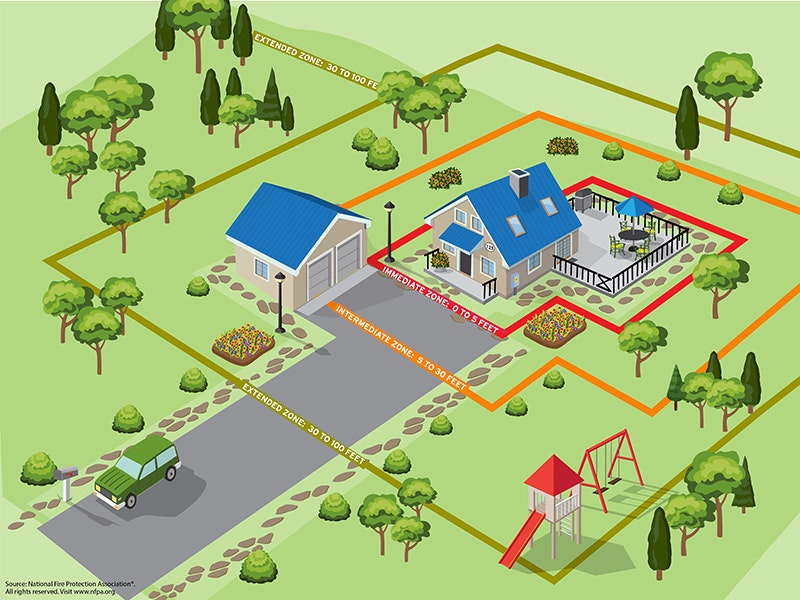
Defensible space is the buffer between your home and the surrounding area. Proper defensible space can slow or stop a wildfire, protect your property, and ensure firefighter safety.
-
Zone 0: Ember Resistant Zone (0-5 ft.)
The first five feet from your home are critical, as flying embers, which can travel miles, are the leading cause of homes lost to wildfire. To protect your home, ensure there are no flammable materials in your Zone 0. This includes creating hardscape features, removing any dead or living vegetation, and ensuring no combustible items are being stored in this zone. -
Zone 1: Home Protection Zone (5-30 ft.)
Creating space between trees and clearing dead vegetation reduces the fuel available for fires. In this zone, it is essential to remove dead plants, regularly trim trees, and maintain space between vegetation and flammable items. Vegetation islands surrounded by hardscape features (gravel, concrete paths) are also a great way to modify fire behavior. Keeping existing vegetation well maintained, lean, and green. -
Zone 2: Reduced Fuel / Thinning Zone (30-100 ft.)
Maintain vegetation, removing any debris accumulation. Ensure trees are properly space, and no connecting fuel from floor to tree canopy is present. Keep grasses trimmed to 4 inches.
What is Home Hardening?
Home Hardening: Protect Against Ember Intrusion
Homes are vulnerable to wildfire due to direct flames, radiant heat, or flying embers. Since embers can travel miles ahead of a fire, it’s crucial to take steps to "harden" your home. This includes many diffrent actions, some include:
- Building with non combistible, Class A rated products on roof, siding, decks, etc..
- Identifying cracks or openings within siding, or roof where embers can enter and ensuring all vents are equipped with 1/8th-1/16th inch metal screening to block embers from entering the structure.
- Installing dual paned, tempered glass windows.
Know Your Risk:
Check your property with the Fire Hazard Severity Zone Map. This interactive map allows you to enter your address to determine whether you are in a fire hazard zone, and its severity.
Frequently Asked Questions
No, we do not require you to be present for the walk around of your property for the home assessment program. However, we do recommend that you be present as it will be useful to have an ongoing dialogue as our assessors note things on the property to reduce your home's ignition risk.
Assessments are completely confidential. We are collecting data to generate a personalized assessment report for you. This program is also beneficial in identifying specific community needs for us to apply for future funding opportunities. We never sell or share your personal information.
No, we are non-regulatory agency and do not report to any other agencies. Our main goal is to educate and provide resources that could better protect your home from ignition.
Yes, renters are welcome to participate in this program with permission provided by the property owner.
No, we do not conduct any installations or repairs to properties. However, we will provide you with resources and recommendations of other organizations that can assist you as applicable.
The home assessment should take roughly 1-2 hours with 2 hours being the absolute maximum.
No, you are not required to implement any of the recommendations made during the assessment. This programs intention is to only provide you with the information needed to take action if you want to and are able to.
This Home Assessment Program is made possible through funding provided by the Department of Conservation.